Unit
Unit 是数据类型,就像 Int、String 一样,是个类型
Unit 只有一个值: ()。就像 100 是 Int 类型的值,3.14 是 Double 类型的值
Unit是anyval的子类型
应用场景
相当于 JAVA中的 void ,用来声明 函数 或 方法 的返回值,表示 没有返回值
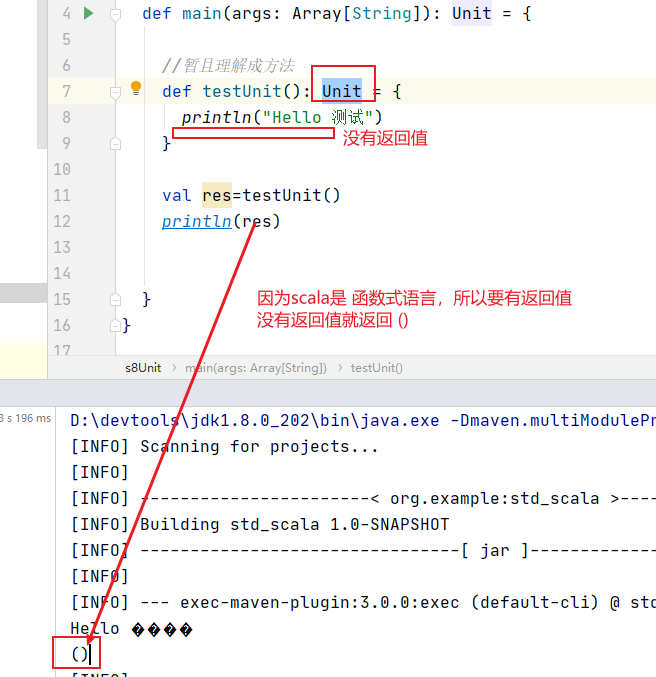
就是说:即使 用 Unit 声明 方法、函数,但实际上还是有 返回值,即:()
原因: scala 是 函数式 语言,所以要有返回值,没有则返回 ()
例子
object Test {
  def main(args: Array[String]): Unit = {
    def testUnit(): Unit = {
      println("Hello 测试")
    }
    testUnit()
  }
}
例子:返回值
object Test {
  def main(args: Array[String]): Unit = {
    def testUnit(): Unit = {
      println("Hello 测试")
    }
    val res=testUnit()
    println(res)
  }
}
Null
Null 是数据类型,就像 Int、String 一样,是个类型
Null 只有一个值: null,表示 空引用。就像 100 是 Int 类型的值,3.14 是 Double 类型的值
应用场景
null 可以赋值给任意 引用类型(AnyRef)
但是 不能赋值给 值类型 (AnyVal: Int, Float, Char, Boolean, Long, Double, Byte, Short)
尽量少用
例子
Int是值类型,把 null 赋值给 Int,会报错
object Test {
  def main(args: Array[String]): Unit = {
    val i:Int=null // idea可能不报错,但运行报错
    val s : String = null // 可运行
  }
}
Nothing
Nothing 是数据类型,就像 Int、String 一样,是个类型
Nothing 没有值。就像 100 是 Int 类型的值,3.14 是 Double 类型的值,但是 Nothing 没有值
Nothing是 所有类型的子类,也是 null 的子类,但是可以定义类型
Nothing不好理解,在java中没有对应的类型
应用场景
函数抛出异常,那返回值类型就是 Nothing
如:Breaks 类的 break() 方法源代码,如下:
def break(): Nothing = { throw breakException }
例子
object Test2 {
  def main(args: Array[String]): Unit = {
    def chufa(a:Int,b:Int):Int = {
      if(b==0){
        throw new RuntimeException("b不能是0")
      }else{
        return a/b
      }
    }
    val res = chufa(4,0)
    println(res)
  }
}
抛出异常的语句: throw new RuntimeException("b不能是0") 就返回 Nothing ,但获取不到值
Nil
Nil 是一个 空的 List,定义为 List[Nothing]
空 Iterator:Nil.iterator