说明
bool 查询(布尔查询)是 Elasticsearch 中最常用的复合查询,通过逻辑运算符 组合多个子查询,实现复杂的条件过滤与评分控制。
子句
must:必须匹配,相当于 SQL 中的andmust not:必须不匹配,相当于 SQL 中的not,如:not in、not likeshould:可以匹配修饰,相当于 sql中的orfilter:过滤器,处理 比较运算,如: 大于、小于
对比
| 子句类型 | 逻辑作用 | 对得分的影响 | 是否必须满足 |
|---|---|---|---|
must |
逻辑与(AND) | 贡献得分(匹配度越高得分越高) | 是 |
must_not |
逻辑非(NOT) | 不贡献得分 | 是(必须不满足) |
should |
逻辑或(OR) | 贡献得分(满足越多得分越高) | 否(除非无 must/filter) |
filter |
逻辑与(AND) | 不贡献得分(得分固定为 1) | 是 |
语法
{
    "bool": {
        "must":     { "match": { "status": 1 }},
        "must_not": { "match": { "language":  "french" }},
        "should":   { "match": { "author": "John Tom" }},
        "filter":   { "range": { "length" : { "gt" : 30 }} }
    }
}
得分计算逻辑
bool 查询的最终得分由以下部分组成:
must和should子句的得分总和:每个子查询的得分(如match的相关性得分)相加;- 归一化处理:根据满足的
should子句数量进行归一化(满足越多,单句得分权重越高); filter和must_not不影响得分:仅过滤文档,不参与评分。
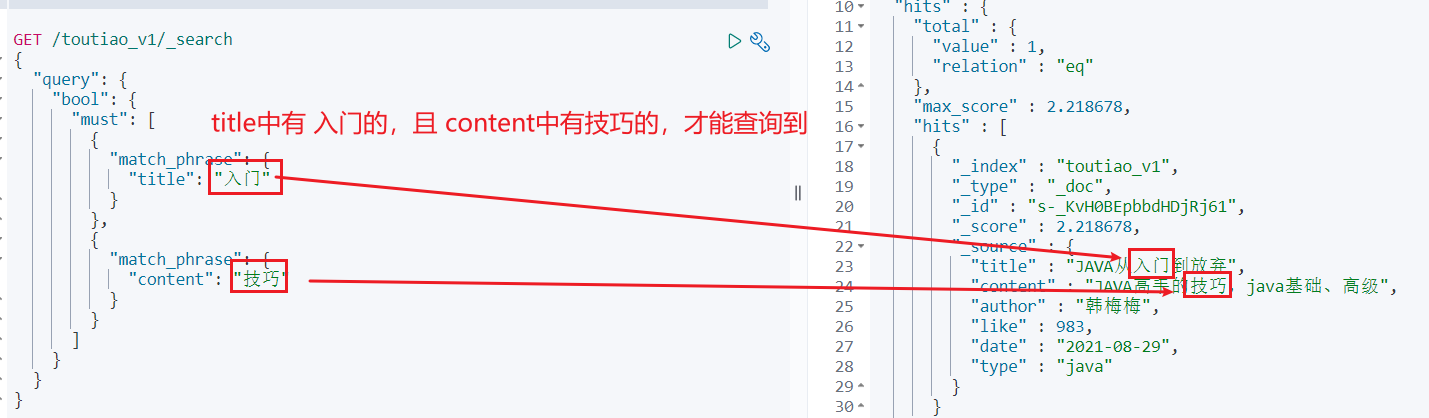
must 多条件同时成立
所有 must 子句的条件必须同时满足,且每个子句的匹配度会参与最终得分计算。
提示:相当于 SQL 中的 and
代码
GET /toutiao_v1/_search
{
  "query": {
    "bool": {
      "must": [
        {
          "match_phrase": {
            "title": "入门"
          }
        },
        {
          "match_phrase": {
            "content": "技巧"
          }
        }
      ]
    }
  }
}
执行结果:
must_not 多条件同时不满足
所有 must_not 子句的条件必须都不满足,不参与得分计算。
GET /your_index/_search
{
  "query": {
    "bool": {
      "must": [{ "match": { "title": "性能优化" } }],
      "must_not": [
        { "term": { "author": "匿名" } },
        { "range": { "publish_time": { "lt": "2023-01-01" } } }
      ]
    }
  }
}
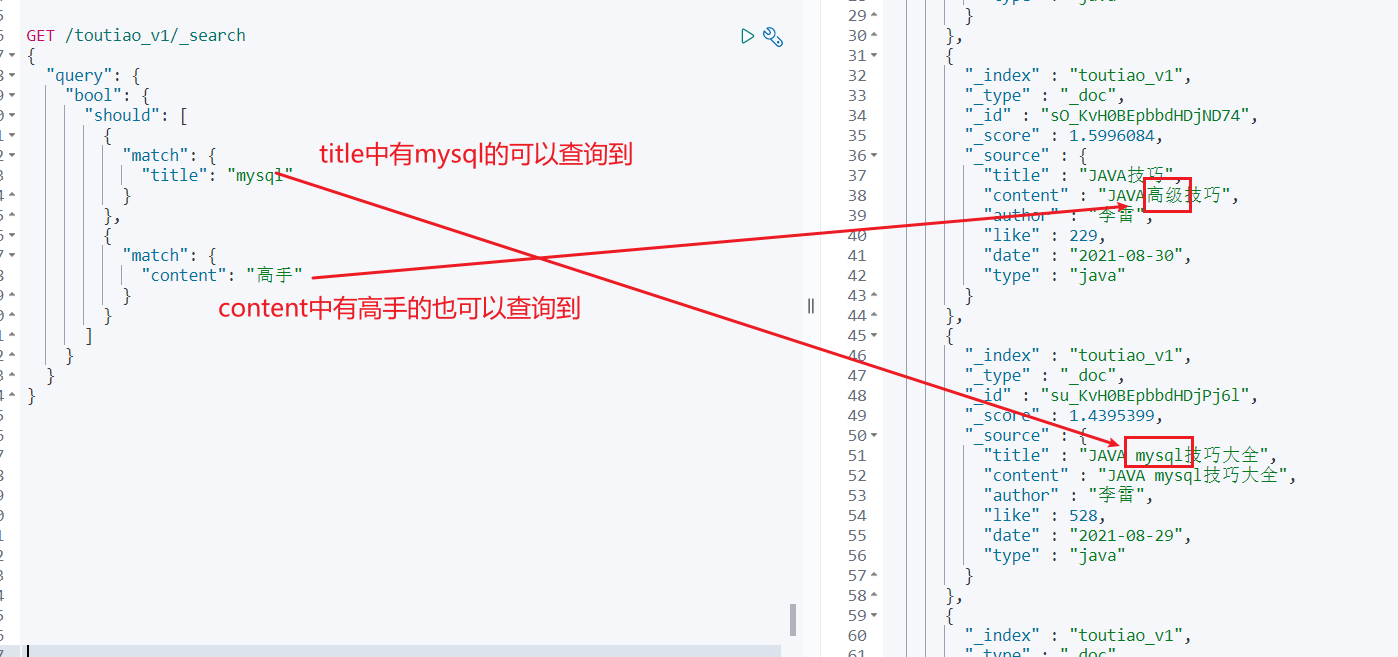
should 多条件成立一个
满足任意 should 子句即可,满足数量越多得分越高。特殊规则:
- 若存在
must/filter,should可选(不满足也可返回); - 若无
must/filter,至少需满足一个should(否则无结果); - 可通过
minimum_should_match强制满足数量(如2或"75%")。
提示:相当于sql中的 or
代码
GET /toutiao_v1/_search
{
  "query": {
    "bool": {
      "should": [
        {
          "match": {
            "title": "mysql"
          }
        },
        {
          "match": {
            "content": "高手"
          }
        }
      ]
    }
  }
}
查询结果如下图:
filter
ElasticSearch 比较查询:filter、must、range(大于、小于)
高级用法
结合 boost 调整权重
通过 boost 参数提升/降低某个子句的得分权重:
GET /your_index/_search
{
  "query": {
    "bool": {
      "should": [
        { "match": { "title": { "query": "Elasticsearch", "boost": 3 } } }, // 权重×3
        { "match": { "content": { "query": "Elasticsearch", "boost": 1 } } }
      ]
    }
  }
}
多层嵌套 bool
GET /your_index/_search
{
  "query": {
    "bool": {
      "must": [
        { "match": { "content": "云计算" } },
        {
          "bool": { // 嵌套bool
            "should": [
              { "match": { "tags": "AWS" } },
              { "match": { "tags": "阿里云" } }
            ],
            "must_not": [{ "term": { "tags": "过时" } }]
          }
        }
      ],
      "filter": [{ "term": { "status": "published" } }]
    }
  }
}
性能优化建议
- 优先用
filter做过滤:filter结果会被缓存,重复查询时性能更高; - 减少
must_not嵌套:must_not需要遍历排除,数据量大时尽量放在外层; - 控制
should数量:过多should子句会增加计算量,必要时用minimum_should_match限制; - 避免深度嵌套:多层嵌套
bool会增加查询复杂度,尽量扁平化结构。
总结
- 核心逻辑:
bool查询通过must/filter/should/must_not实现多条件组合,灵活控制匹配规则; - 得分关键:
must/should影响得分,filter/must_not仅过滤; - 性能优化:优先用
filter做高频过滤,合理控制嵌套深度和子句数量。