概述
Beautiful Soup是python模块,用于解析html、xml文件,提取想要的数据
python解析html的模块有很多,经过大量查看比对,目前该模块优点较多,目前也最火
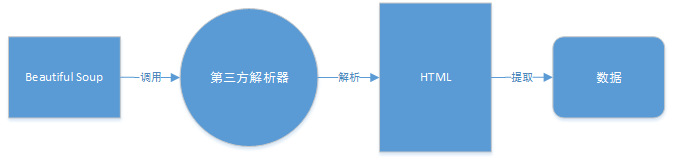
Beautiful Soup 并没有解析html的功能,也就是说还需要安装解析html的解析器,然后调用解析器处理html,提取数据,过程如下图:
当前最新版本是4,所以一般称之为 BeautifulSoup4 或者 bs4
官方网址
https://www.crummy.com/software/BeautifulSoup/
中文api文档
https://www.crummy.com/software/BeautifulSoup/bs4/doc/index.zh.html
本课程是依据官方api文档讲解
安装
pip install beautifulsoup4 -i https://pypi.douban.com/simple
解析器的比较
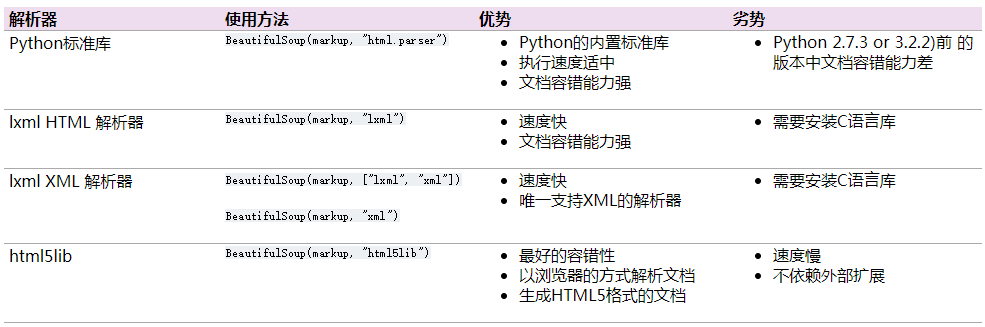
当前推荐使用内置解析器 html.parser
常用方法
官方文档写的很详细,这里只介绍常用的功能,以及官方文档 没有写的方法
创建BeautifulSoup对象
读取html文件:
from bs4 import BeautifulSoup

soup=BeautifulSoup(open('index.html',encoding='utf-8'),'html.parser')
读取html字符串:
from bs4 import BeautifulSoup

html='''
<html><head><title>html标题</title></head>
<body>
<p class="title"><b>文章标题</b></p>

<p class="story">Once upon a time there were three little sisters; and their names were
<a href="http://example.com/elsie" class="sister" id="link1">Elsie</a>,
<a href="http://example.com/lacie" class="sister" id="link2">Lacie</a> and
<a href="http://example.com/tillie" class="sister" id="link3">Tillie</a>;
and they lived at the bottom of a well.</p>

<p class="story">...</p>
'''
soup=BeautifulSoup(html,'html.parser')
搜索文档树
使用bs4,可以很方便的找到某个标签
主要有3种查找方式:
- css选择器
- find_all()
- find()
由于css选择器使用简单(与css选择器相同),功能十分强大,代码量少,推荐使用css选择器,
官方链接:https://www.crummy.com/software/BeautifulSoup/bs4/doc/index.zh.html#id37
语法
Tag.select('')
返回
list类型,其元素是Tag
按照标签名搜索
l=soup.select('p')
print(type(l))
print(l)
结果
<class 'list'>
[<p class="title"><b>文章标题</b></p>, <p class="story">Once upon a time there were three little sisters; and their names were
<a class="sister" href="http://example.com/elsie" id="link1">Elsie</a>,
<a class="sister" href="http://example.com/lacie" id="link2">Lacie</a> and
<a class="sister" href="http://example.com/tillie" id="link3">Tillie</a>;
and they lived at the bottom of a well.</p>, <p class="story">...</p>]
通过属性值查找
l=soup.select('p[class="title"]')
print(l)
更多搜索方式参见链接:
https://blog.csdn.net/amao1998/article/details/82663978
获取html源代码
语法
Tag.prettify()
返回
字符串类型,美化的html源代码
例子
l=soup.select('p[class="title"]')
print(l[0].prettify())
获取标签中的文本
语法
Tag.text
标签内的文本
例子
l=soup.select('p[class="title"]')
print(l[0].text)
获取标签中的属性值
语法
Tag['属性名']
或者
Tag.get('属性名')
注意:
- class属性,返回的是list
- 其他属性,返回的是字符串
例子
l=soup.select('a')
for item in l:
    print(item['href'],item.get('id'),item.get('class'),sep=' , ')
结果:
http://example.com/elsie , link1 , ['sister']
http://example.com/lacie , link2 , ['sister']
http://example.com/tillie , link3 , ['sister']
修改标签属性
语法
Tag['属性名']=值
官方链接:https://www.crummy.com/software/BeautifulSoup/bs4/doc/index.zh.html#id41
例子
给标签增加id属性,值为t
title['id']='t'
print(soup)
删除标签
将当前节点移除文档树并完全销毁
语法
Tag.decompose()
官方链接:https://www.crummy.com/software/BeautifulSoup/bs4/doc/index.zh.html#decompose
例子
a=soup.select('#link1')[0]
a.decompose()
print(soup)
感谢:
https://blog.csdn.net/amao1998/article/details/82663978
https://blog.csdn.net/qq_41654985/article/details/81017569